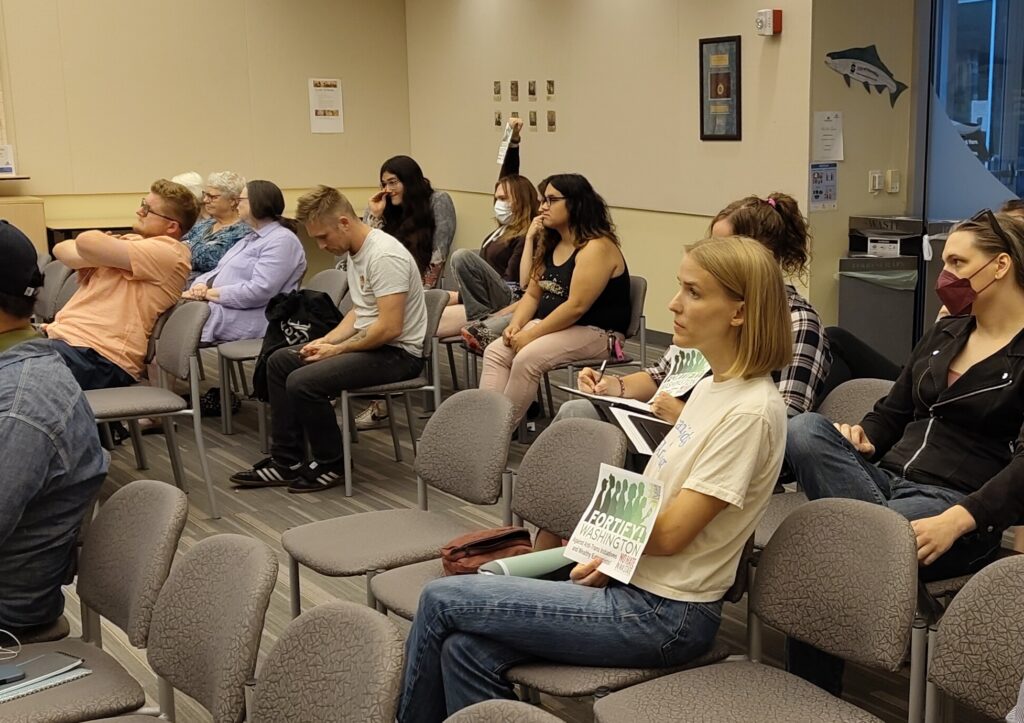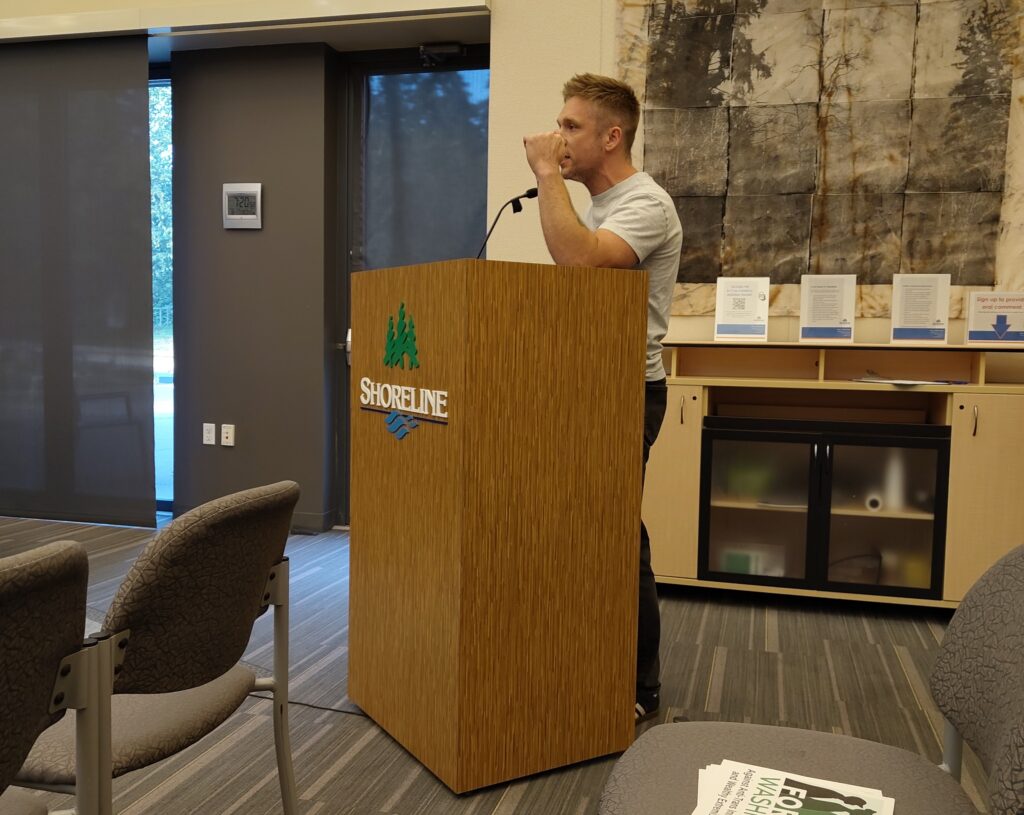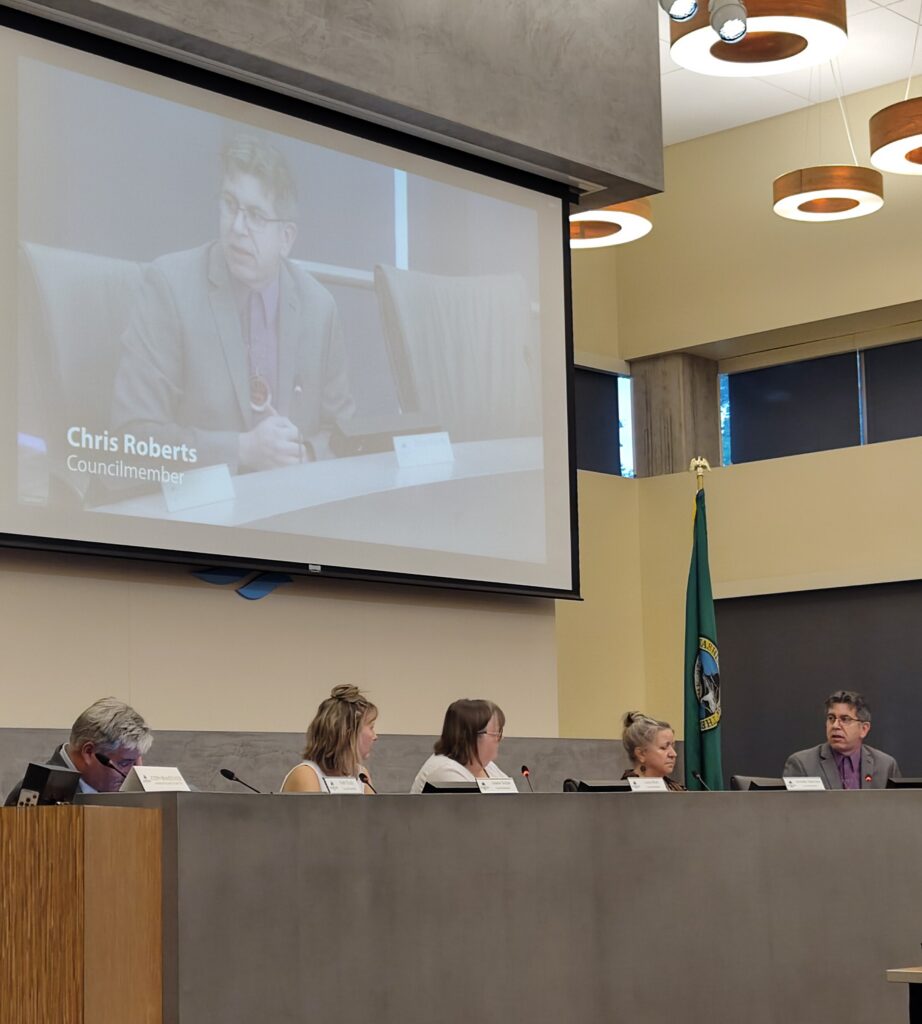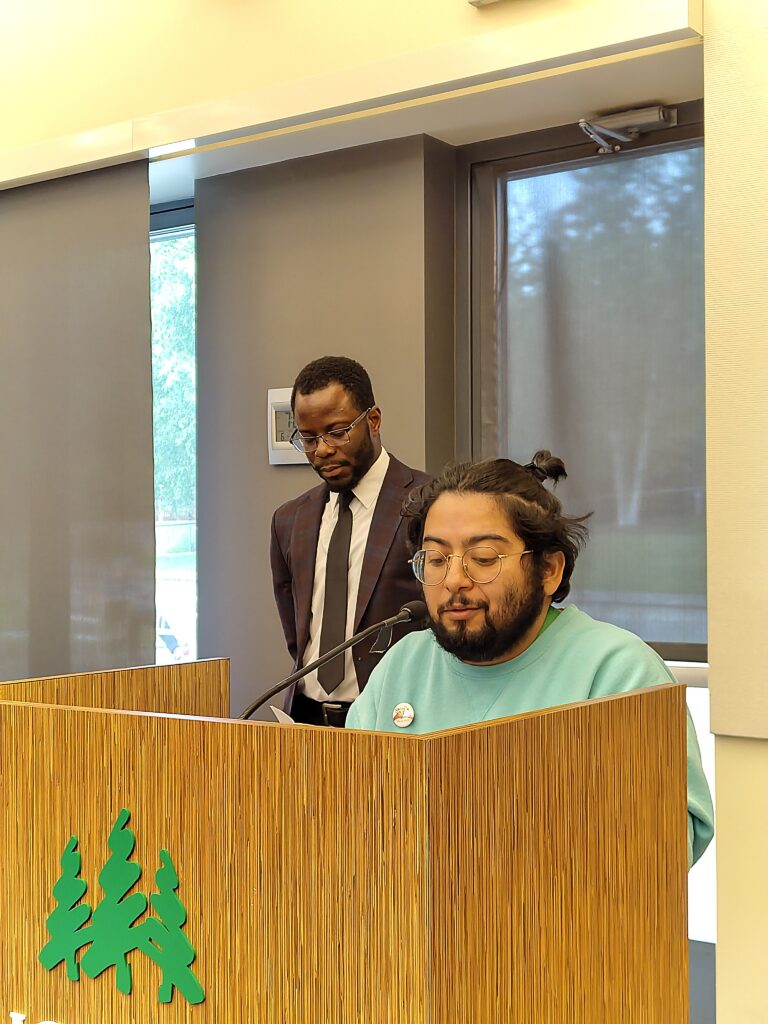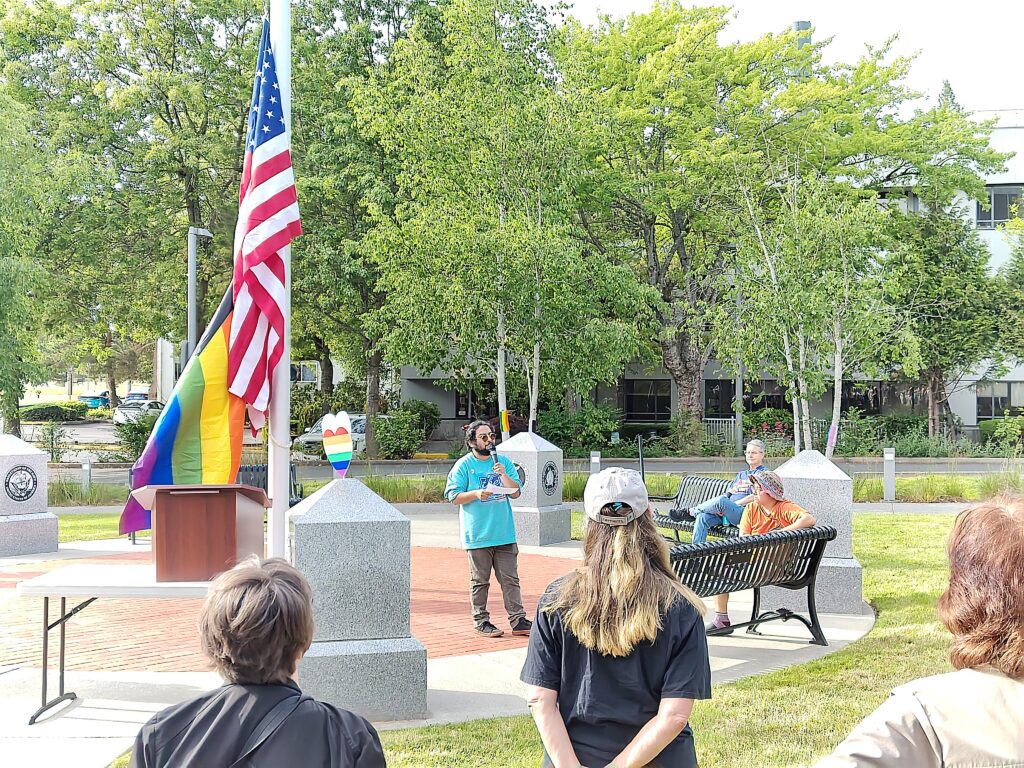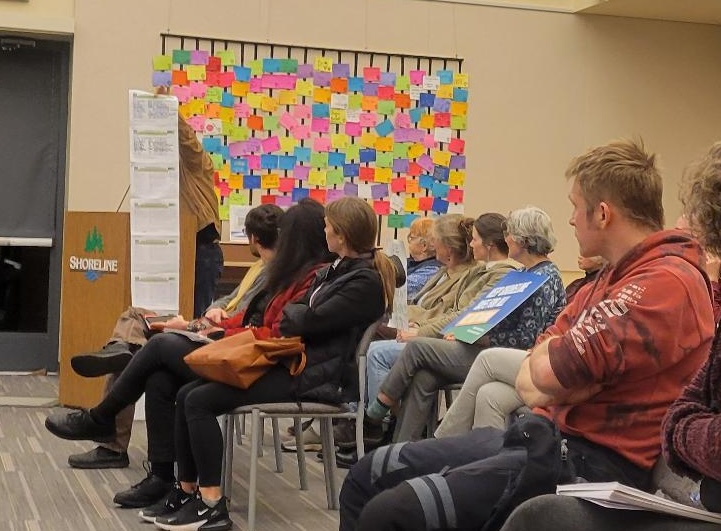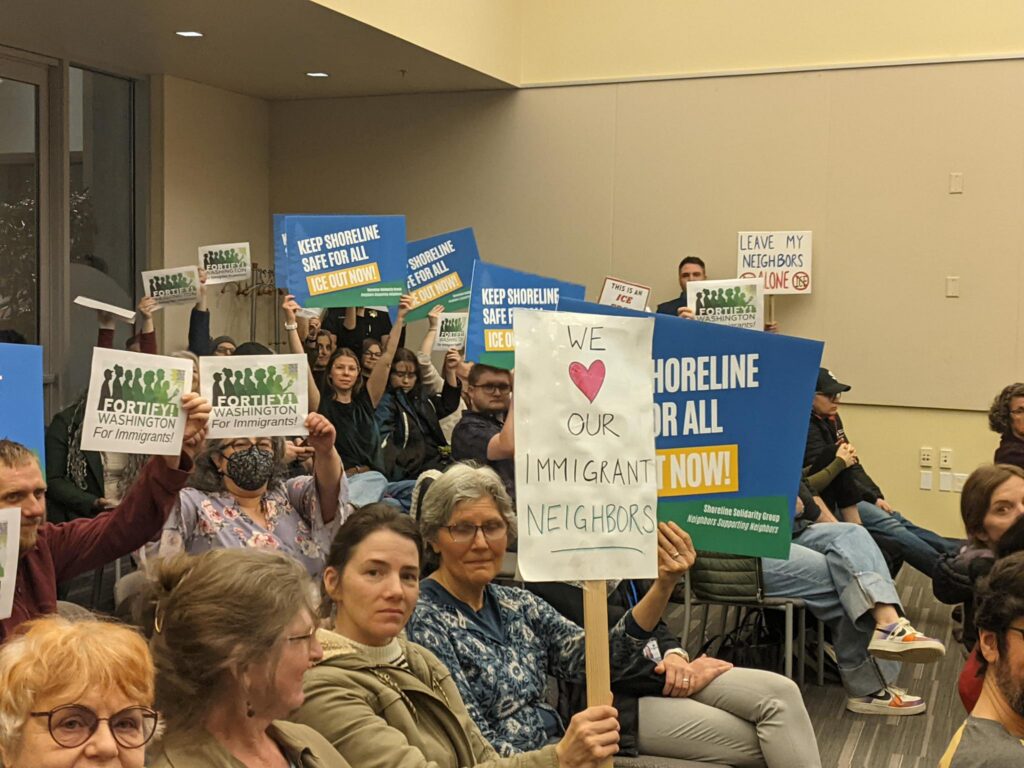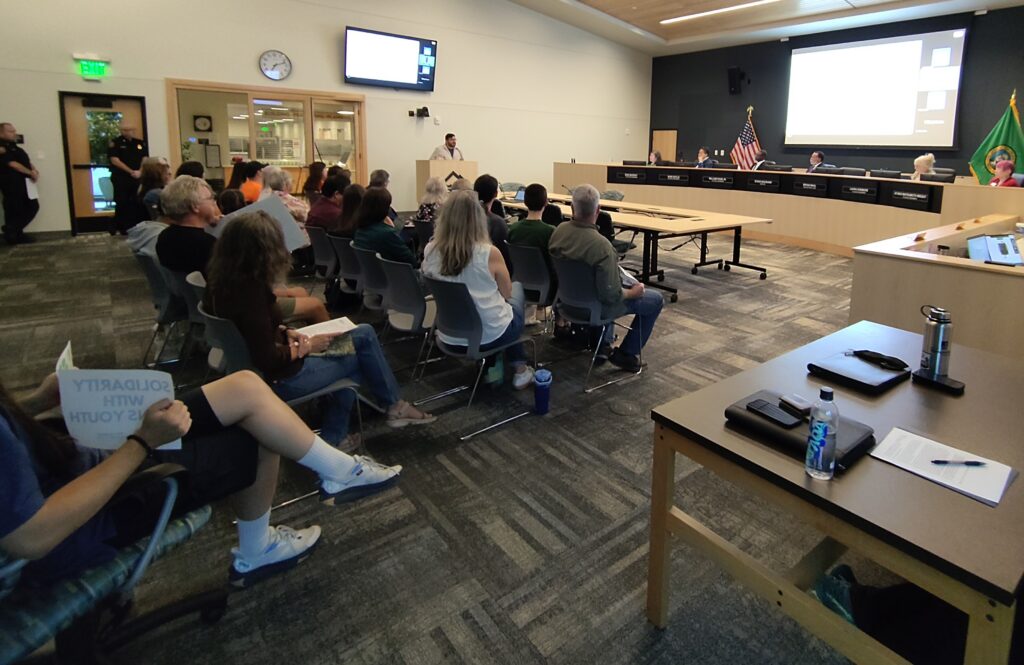
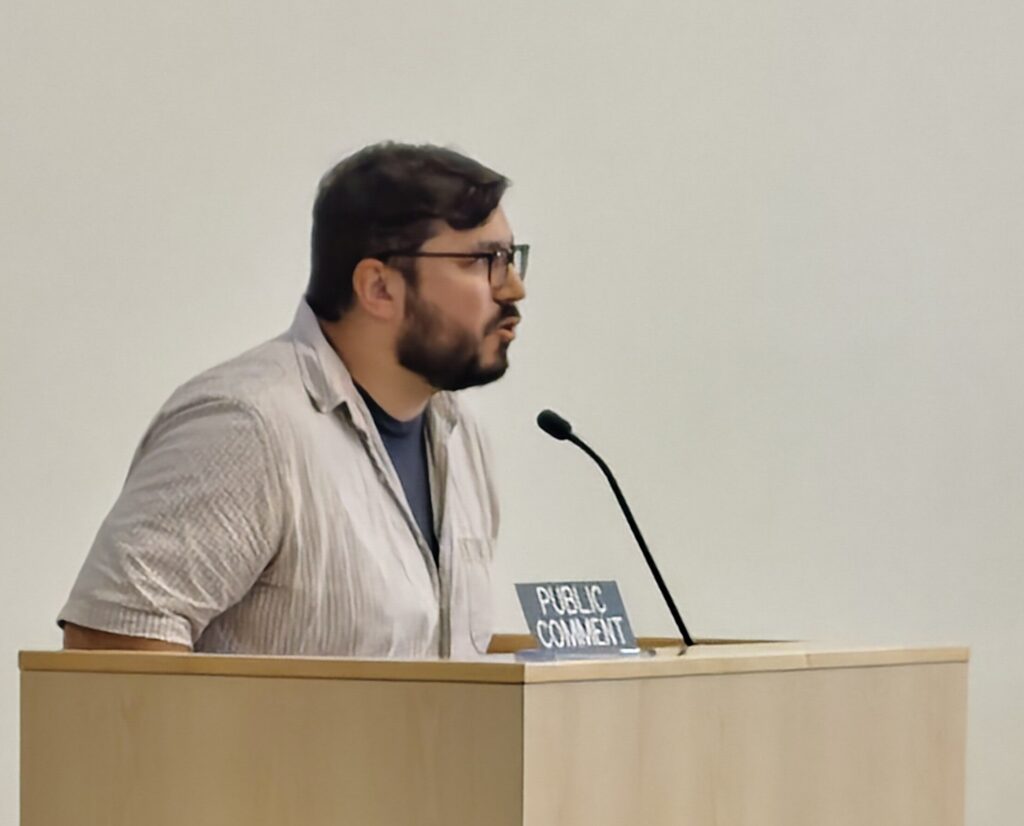
Mountlake Terrace, WA – On Thursday, Sept 17th, at their regular City Council meeting, the Mountlake Terrace City Council unanimously passed (6-0) their version of the Fortify!/No Hate model resolution (online petition) to a full audience composed about half with No Hate supporters. Councilmember Wahl was absent.
This makes MLT the third city this week to pass such resolutions, on the heels of Kenmore and Seattle, which both took similar action. MLT’s passage brings the total number of resolutions in support of the No Hate in WA State campaign opposing Brian Heywood’s extremist agenda to five, with more cities slated to take similar action in the next few weeks. You can follow that progress in this post: https://fortifywa.org/2026/09/17/resolution-activity-fall-2026/
“In the midst of a tidal wave of anti-trans legislation in 2026,” said Councilmember Doyle, who lead the effort to bring the resolution to the Council, “adopting this resolution is one way to combat anti-trans sentiment and outright hatred that is unfortunately becoming all too common and brazen in this country.”
[Councilmember Doyle’s comments are presented in full at the bottom of this post.]
City Manager Jeff Niten noted before the vote that passing the resolution would “formalize the City Council’s position.”
Councilmember Paige talked about how the No Hate campaign took him back to his own youth and fight against hate.
“When I was in 8th grade, in 1972-73, I remember in April, because of all the things that were going on in Boston,” he said.
“I realized that, kind of, the things that are going on now aren’t too much different than what was happening then. And I remember as an 8th grader in April, a whole bunch of us. … We had this little chant. We walked out of the Frank V Thompson school and we had to walk across this little bridge over the railroad track, and we were saying “No hate, No hate.” … “No Hate. No Hate. You got me waitin’ because you’re discriminatin’. No hate. No hate.” And it just really make me jump back and reflect on what it is that’s going on here. And I would just be remiss if I just didn’t say something about how important it is – that we’re talking about our children.”
“I know what hate looks like. I know what it feels like. I know what it smells like,” he added. “And I know how it affects, y’know, children and adults.”
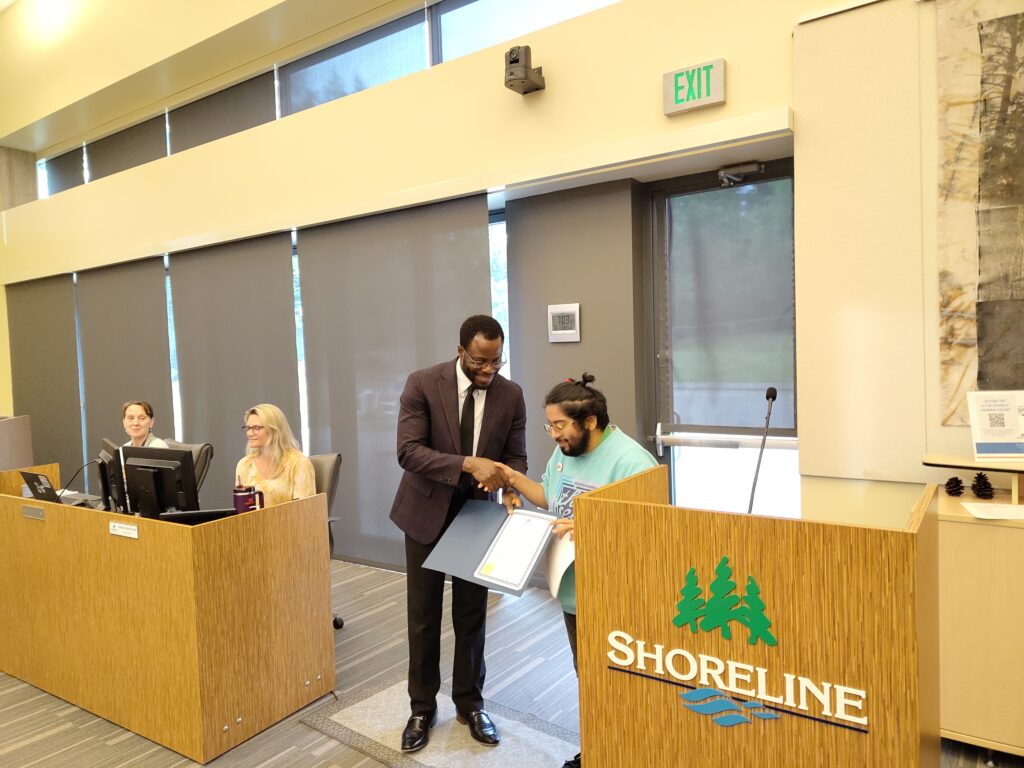
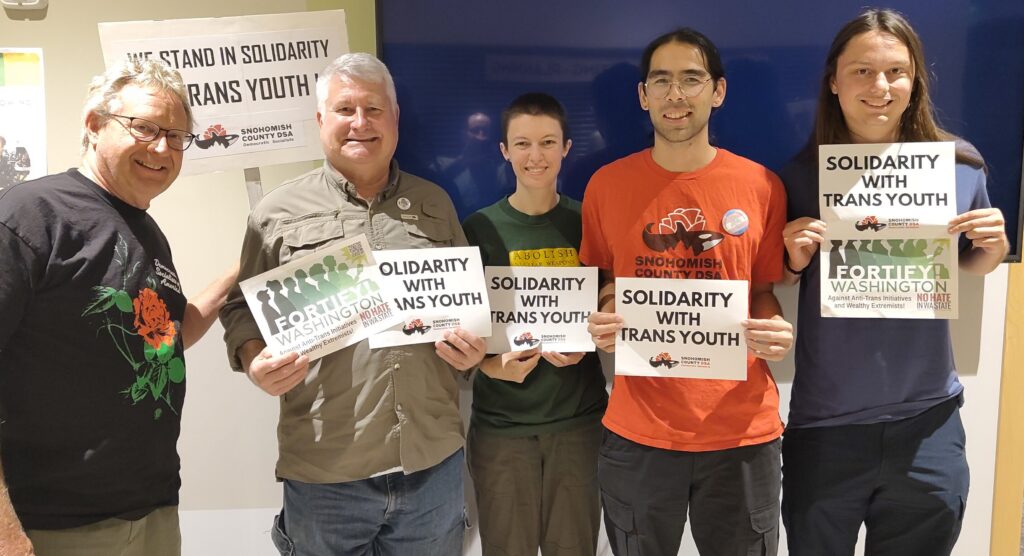
The meeting was well attended by supporters, with a strong showing by the Snohomish County Democratic Socialists of America (DSA), who, with other supporters, stuck it out through over two hours of proclamations and presentations before the vote was taken.
As of this writing, the next cities slated to take up Fortify!/No Hate model resolutions are Issaquah on Sept. 22 (proposed resolution and staff report), Lake Forest Park on Sept 24th (Agendas & Minutes) and Bothell tentatively on Oct 6 (Agenda Center).
Additionally, King County Council is slated to take action on Sept 22 on two initiatives, one each opposing 638 and 001 (meeting agenda).
Councilmember Doyle’s powerful comments from the dais, in their entirety:
First, thank you to allies for coming tonight and showing us all that the word “ally” is not only a noun–it’s also a verb. As a queer person with trans family and friends, I want to thank you personally for showing up. But obviously adopting this resolution isn’t about me, or my family, it’s about all of us–trans and cisgender alike. It’s about everyone in this city–whether a resident or a visitor. It’s about the safety of our children, all of our children.
Two of our Council goals are:
An Informed and Engaged Community
Growing Our Vibrant CommunityTaking an official position by passing a resolution opposing IL26-001 and IL26-638 helps us as a council to put these goals into action. As individuals, governing bodies, and cities, we can espouse certain values/set goals on paper but often the more challenging part is when it’s time to turn theoretical values/goals into public action.
THIS is one of those times.
In the midst of a tidal wave of anti-trans legislation in 2026, adopting this resolution is one way to combat anti-trans sentiment and outright hatred that is unfortunately becoming all too common and brazen in this country. In 2026 alone, dozens of such measures have become law, affecting health care, education, public accommodations, identification documents, athletics, and other parts of everyday life. Our resolution tonight is part of a much bigger picture. Let’s join Kenmore, Shoreline, and Tacoma by taking a stand.
I also see opposing these initiatives as an affirmation of our commitment to public safety via public health advocacy, as we are committing to upholding the right of bodily autonomy and privacy, in this instance for girls–ALL girls.
It’s notable that this vote is taking place during Welcoming Week- one of the goals of Welcoming Week (a national event) is to build inclusive communities and foster a sense of belonging for all residents. I invite my colleagues to join me in voting YES to oppose both of these initiatives, and by doing so we can show publicly that Mountlake Terrace is indeed committed to including all people, embracing the beautiful diversity of our trans and LGBTQIA+ neighbors, and protecting our community’s children from harm.